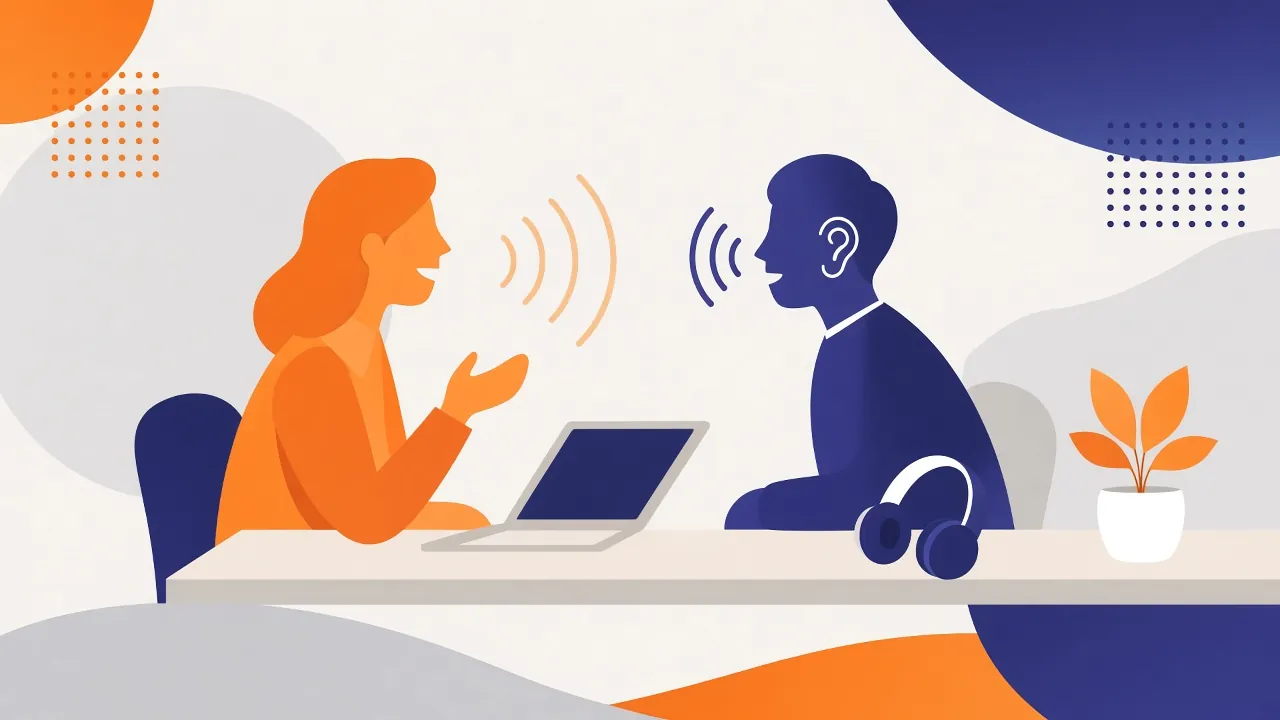
If you spent the last days of September giving feedback that went nowhere, or receiving praise that felt hollow, the problem may not be your message. It may be the listening around it. This week brought two stories that belong together: a Forbes piece on September 29 arguing that feedback fails when leaders treat quiet nodding as listening, and HRKatha’s September 30 analysis of OECD research showing a narrow but worrying gap between how much employers value communication and how much some managers still practice empathy.
That tension matters in October 2026. ManpowerGroup’s Q4 Employment Outlook, released September 8, shows selective hiring for changing roles and skills through year end. Communication, collaboration, and teamwork led its global soft-skill premiums at 72% in the Q3 survey wave, with critical thinking and adaptability near 68%. Listening is the behavior that makes those premiums real on a team.
What changed this week
September 29: Forbes coverage from the Committee of 200 highlighted a pattern leadership researchers see repeatedly. Top listeners ask questions that promote discovery, gently challenge assumptions, and build trust so feedback lands instead of triggering defensiveness.
September 30: HRKatha walked through the OECD policy brief AI and Skills: What We Know So Far (published June 2026) with a headline number that cut against the usual “AI makes human skills priceless” narrative. Among managers using algorithmic-management software in Germany, France, Italy, and Spain, 20% said the technology reduced their need for empathy. Only 12% said it increased that need. The OECD treats that as a signal, not proof of decline, but the mechanism is worth taking seriously. When work allocation, performance signals, and status updates arrive through dashboards, some of the sensing that once required face-to-face attention can feel optional.
October 1: India Today’s impact feature on human skills in AI-driven workplaces echoed what employers have been saying all quarter: critical thinking and communication still differentiate people who merely use tools from people who improve outcomes. The through line is interpersonal effectiveness under change, not another prompt-engineering checklist.
None of that replaces September’s deeper dives. We covered critical thinking and judgment after IBM’s CHRO study on September 21, and work stress tied to role clarity on September 18. This week’s news adds the conversation layer: even when roles are clear and judgment is sharp, teams stall when listening is performative or empathy gets outsourced to software summaries.
The empathy anomaly in plain terms
HRKatha’s summary of the OECD brief is careful, and you should be too. For most workers, AI is not making human capabilities obsolete. SMEs using generative AI frequently rank data interpretation, critical thinking, creativity, and communication as more important, not less.
Empathy is the outlier in one slice of the data: managers already inside algorithmic-management systems in four European countries. Two readings compete. Software could free managers from administrative monitoring so they coach more. Or dashboards could substitute for the slow work of noticing tone, conflict, and hesitation.
The OECD asks organizations to monitor not only productivity and skills, but job quality, social interaction, and worker well-being. That is the right frame for remote workers and freelancers. You may never see your client’s headcount dashboard, but you still feel when a manager understands you only through ticket metrics, or when a client treats Slack green dots as engagement.
Freelancers get a compressed version. A client who never schedules a live check-in may still score your responsiveness in a project tool. Your listening skill becomes how you recap calls, surface risks early, and ask clarifying questions before rework. That connects to the reliability signals we outlined in personality and hiring research earlier in September: proof beats adjectives, especially when nobody shares an office with you.
Active listening is not passive silence
Forbes this week pushes back on a common manager habit: equating good listening with not interrupting. Research on thousands of managers finds top listeners actively reshape the conversation. They probe context, reflect what they heard, and invite correction before they advise.
That distinction shows up everywhere async work breaks down. A one-line “Got it” in Slack is not listening. A short recap that names the decision, the open question, and the next owner is. The same habit reduces the role ambiguity we wrote about in structured hybrid teams on September 11, when unwritten decisions burned out people who were never in the hallway conversation.
If you lead projects, even informally, try this order:
Listen for circumstances, not verdicts. Ask what constraints shaped the work before you judge the output.
Play back specifics. “You are blocked on legal review and the launch date moved to the 15th” beats “Sounds frustrating.”
Separate empathy from agreement. Understanding why someone missed a deadline is not the same as accepting a missed deadline without a plan.
Offer feedback only after the other person confirms you heard them. Forbes’s leadership sources tie that sequence to lower defensiveness and higher follow-through.
For individual contributors, the mirror image matters in Q4 planning conversations. Managers facing ManpowerGroup’s transformation hiring drivers (62% of add-staff plans cite changing roles and skills) will reshuffle work quickly. If you only hear tasks, you will miss the political and emotional subtext that determines whether you keep high-visibility work.
Soft skills you can practice before year-end reviews
October is when teams set Q4 goals and calibrate performance. These habits align with what employers say they pay for, without requiring a title change.
Run a three-question discovery habit on client and manager calls. What outcome matters most right now? What would make this a success in your view? What should I stop doing? Write answers in shared notes. That is active listening with a paper trail, the async version of Forbes’s best listeners.
Audit one thread where feedback failed. Did the other person never get airtime, or did you respond before they finished? Replay one exchange and rewrite your first reply as questions only. Often the second message would never have been necessary.
Name the channel where empathy should live. If your team relies on algorithmic metrics, agree where human check-ins happen: weekly video for five minutes, or a standing “blockers and morale” line in standup. Remote teams that skip this step drift into dashboard-only management by default.
Practice reflective summaries in writing. After interviews or sales calls, send a bullet recap of what you heard and what you will do next. We suggested the same tactic in September’s personality hiring piece; this week’s Forbes coverage explains why it works psychologically, not just politely.
Protect your own listening bandwidth. Cap how many emotionally loaded threads you will engage in a day. Finish one clarifying conversation before opening another generation-heavy task. That pairs with the thoughtload ideas in our critical thinking post.
Ask hiring managers and clients about listening norms. Our guide on where to apply for remote work helps you find roles. This week’s data suggests a follow-up question: how does this team handle disagreement when someone is remote, and who is expected to surface concerns before they become metrics?
What not to do
Do not treat empathy as a personality trait you either have or lack. Stanford education research, cited in recent Forbes leadership coverage, frames empathic communication as learnable. That matters if you are early career and worry AI drafts make you sound competent while you still struggle with hard conversations.
Do not assume AI summaries replace listening for managers or clients. Kellogg School research in 2026 found people often fail to express empathy they actually feel, while recipients discount empathic messages when they believe an AI wrote them. Tools can coach wording; they do not remove your obligation to show up curious.
Do not confuse communication premiums with volume. ManpowerGroup’s 72% figure is about collaboration that moves work forward, not more meetings. Listening reduces rework, which is how freelancers protect margin when scopes shift in Q4.
The bottom line
September closed with hard data on judgment and role stress. October opens with a softer skill that determines whether any of that data changes behavior: listening that seeks understanding, and empathy that survives dashboard-heavy management.
Employers entering Q4 still say they will pay for communication. OECD’s empathy signal says some managers may be quietly devaluing the interpersonal work that makes communication real. Your move, whether you employ yourself or someone else, is to make listening visible: ask better questions, recap accurately, and treat empathy as practice you schedule, not a vibe you hope people notice in review season.